In this series

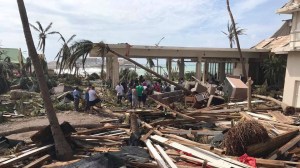
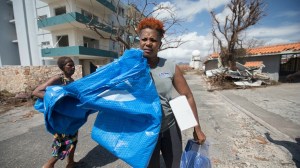
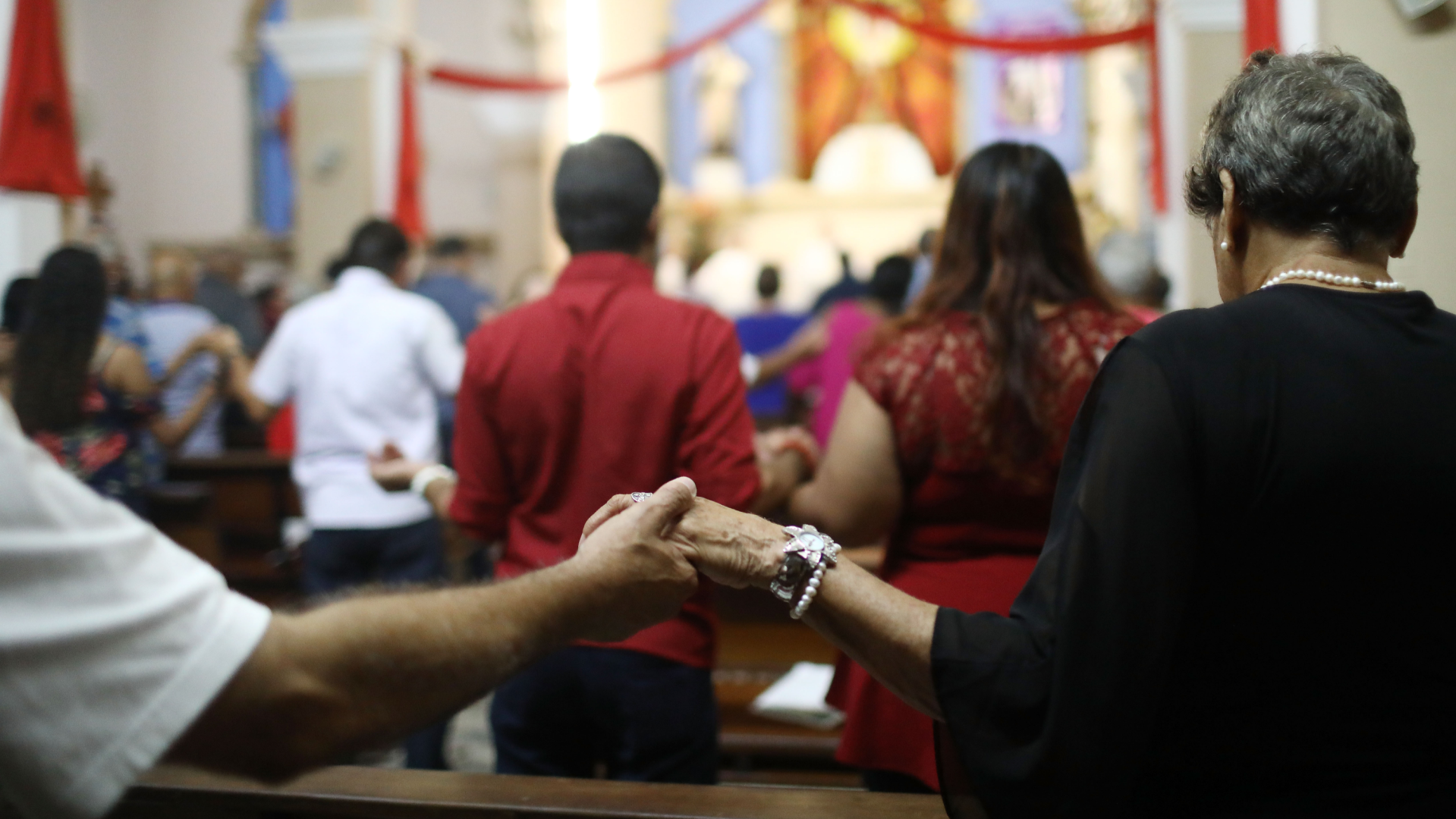
The evangelical church in Puerto Rico won’t be the same after Hurricane Maria.
Even congregations that have resumed their regular gatherings after repairing buildings and regaining power are still missing a major part of church life: some of their members.
An estimated 400,000 of the island’s more than 3 million residents have left the US territory for the mainland since the record-setting September storm. Like every other aspect of Puerto Rican life, church attendance has taken a hit.
Gadiel Ríos’s 350-member congregation in Arecibo, La Iglesia del Centro, saw five to six families relocate to the mainland after enduring ongoing power outages and financial hardship—a number similar to losses experienced by fellow pastors.
About a third of Ríos’s congregants still don’t have power—the same proportion of electricity customers island-wide who are still waiting for service. He estimates Sunday attendance has dropped 5 to 10 percent.
“All of this is putting a lot of strain on families,” he said. “Remember that Hispanic families are very close and tend to live in clusters to support each other; now Maria is disrupting this way of life.”
Meanwhile, Spanish-speaking congregations in the States have welcomed the Puerto Ricans who have fled, particularly those in Orlando, where the “great migration” is expected to transform the city. Of all the people who moved to the continental US from the Caribbean island in the past four months, more than 300,000 settled in Florida alone, according to the Sunshine State’s division of emergency management.
Members of Calvario City Church greeted arrivals from Puerto Rico as soon as they landed in the Orlando International Airport, where they served as bilingual volunteers. Dozens of families ended up joining them in worship—a bittersweet transition from the churches, homes, and jobs they left behind.
“Nobody wants to leave, but the options are so minimal,” said Gabriel Salguero, co-pastor of Calvario City and president of the National Latino Evangelical Coalition (NaLEC). “We’ve even had pastors come because their churches were so hard-hit.”
Salguero’s denomination, the Assemblies of God, lost 50 churches in Puerto Rico, while a fellow Pentecostal body had 150 churches undergo severe damage. His uncle, a pastor on the island, now shares space with a fellow congregation since his building was among the wreckage.
In addition to Florida, Puerto Ricans are settling in New York, New Jersey, Ohio, and Texas.
“The majority of those that have left seem to indicate a desire to remain within the continental US rather than return to the island,” said Tony Suarez, vice president of the National Hispanic Christian Leadership Conference (NHCLC). “Many have lost their homes and possessions and are simply seeking to start over.”
NaLEC and NHCLC have rallied American churches on the mainland to support the Christians who are staying in Puerto Rico to rebuild, giving millions in aid toward relief efforts. The NHCLC estimates that 3,000 Puerto Rican churches were damaged in Hurricane Maria.
Back in the fall, NHCLC board member and Puerto Rican megachurch pastor Wanda Rolón said:
We understand why some of our brothers and sisters have decided to leave the island and I believe life will go very well for them wherever they decide to plant their roots, but many of us have also made the decision to stay … and we are going to make history because we are going to rebuild this island and experience what Rev. Sam Rodriguez called “Puerto Rico 2.0.”
Those remaining in Puerto Rico face spiritual and emotional burdens on top of the island’s ongoing infrastructure and financial needs.
“Every week is unique, and pastors are faced with the need to get insight from the Spirit of God to understand the mood and emotional state of the congregants,” said Ríos, citing a rise in depression and marital issues among hurricane victims, as well as concerns over suicide rates and violent criminal activity in the long recovery period. January marked the island’s deadliest month in recent years, according to an Associated Press report.
“First of all, we need your constant prayers. Entire lives were disrupted by this crisis and we need to minister to them, and help them continue their path, whatever it may be,” he said. “Second, a large number of families relocated in the States will need solid, Bible-teaching, Christ-exalting churches to attend, so we need more church planters in the mainland. Third, we need advocates to ensure the federal government treats Puerto Rico with fairness and justice.”
Marco Rubio, a Florida Republican senator and 2016 presidential candidate, spoke up this week to say Congress needs to do more to ensure disaster relief continues in Puerto Rico. The Federal Emergency Management Agency (FEMA) clarified that the government will keep sending supplies.