That was fast. In the first General Conference since the most conservative congregations disaffiliated, the United Methodist Church liberalized its teachings on marriage, sexuality, and the ordination of LGBTQ clergy.
In other mainline denominations, like the Evangelical Lutheran Church in America and the Presbyterian Church (USA), the conservative exodus has tended to come after the progressive victory. But in the UMC, the conservative American contingent is already gone, so the vote wasn’t close.
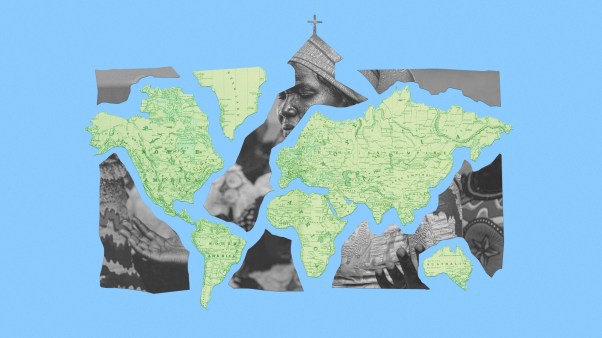
With that settled, the next and perhaps final battle between American Methodists who have been on opposite sides of theological and social issues for more than half a century will concern who can win over the Africans, who have been the “main group opposing the changes in policy” on sexuality and are also the largest UMC contingent outside the United States. The breakaway conservative denomination called itself the Global Methodist Church in no small part because members hoped to remain in fellowship with churches in the Global South, where Methodism is more orthodox—and growing as Methodism in the US hasn’t in years.
But the United Methodist Church has also set in motion a plan to allow regional autonomy on the very issues that broke up the denomination domestically. This would permit African churches to remain traditional in how they define marriage and—so the pitch goes—otherwise insulate themselves from the Americans’ liberal course.

African Methodists have previously rejected similar proposals, likely understanding how such rules would dilute African churches’ influence over the denomination and exempt leaders of the shrinking US church from accountability to their African counterparts. They would be wise to reject the plan again.
I give that advice as a conservative Methodist myself—and one facing a similar quandary over denominational affiliation. For now, I remain a United Methodist. My church is theologically traditional but fell short of the congregational vote threshold to disaffiliate, and there’s no Global Methodist presence in my area.
Yet, longer term, I see no future for conservatives of any nationality in this denomination. With so many evangelical congregations and much of the organized resistance to theological liberalism gone, the trajectory displayed in this week’s conference votes will only accelerate.
A better path, as we near the end of the mainline, would be continued connection between the African and American Methodists who together prevented the UMC from going down this road for more than 50 years. Global Methodists have an opportunity to inherit the most vibrant parts of United Methodism while disentangling from its outdated bureaucracy. More importantly, they have a chance to provide an orthodox Wesleyan witness that is compromised neither by liberalism nor by fundamentalism.
The UMC held together as long as it did because it was orthodox on paper but progressive in practice, except in jurisdictions where traditionalists were numerically prevalent. But eventually, liberals who saw prohibitions on same-sex marriage as morally equivalent to racial discrimination could no longer live with even nominal orthodoxy. And conservatives could no longer watch those prohibitions being routinely flouted without consequence.
Yet our divides were never solely about same-sex relationships. When Methodists began debating homosexuality in 1972, it was a reliable proxy for beliefs about biblical authority and the Christian understanding of love. Today, I still believe liberalizing on sexual morality reflects an errant, culture-conforming view of Scripture and tradition, but I also think Methodists have other pressing questions to address—questions that sometimes cut across lines of debate over gay marriage and related topics.
Today there are more Methodists who passionately disagree with each other on LGBTQ questions while being able to recite the creeds together without crossing their fingers. And there are Methodists who are slipping away from very basic doctrines about Christ and Scripture. If we can complete the denominational split and welcome the African churches into Global Methodism, perhaps conservative Methodists can set aside decades-long sexuality debates and focus instead on core theological matters—and the broader work of the church—without compromising on marriage or abortion.

That vision is particularly appealing because many of us on the conservative side have come to believe we were not ambitious enough. Over a long period of time and with considerable effort, even without real executive authority to expedite the process, maybe we could have gradually transformed the UMC from a center-left denomination with a strong evangelical subculture to a (mildly) center-right one with a strong liberal subculture.
That opportunity, if it existed, has passed. But now, perhaps, we can do even better by going our separate ways. I was recently at a dinner outside Washington, DC, with longtime combatants in the fight for Methodist renewal. Many expressed their wonderment and relief now that the fight was “lost”—that they could now follow conscience and conviction without active resistance from progressive church leaders.
Just a few years ago, they would have been hunkering down to do battle at the General Conference, an experience a pastor friend once described to me as being like attending the Republican and Democratic National Conventions at the same time. Now, conservative Methodists are free to practice an orthodox faith marked by the distinctive parts of our Wesleyan heritage.
There’s no guarantee that conservative Methodists will flourish, of course. But the new beginning offers real promise, and our prospects will be better if our African brothers and sisters join us. Global Methodism is continuing a tradition that shares their values and biblical perspective, and membership from the Global South is vital to the church we’ve sought to build together for so long.
W. James Antle III is executive editor of the Washington Examiner magazine.