The following books are selected by I’Ching Thomas, a writer and speaker specializing in the relevance of the Christian faith in Eastern cultural contexts, and author of Jesus: The Path to Human Flourishing: The Gospel for the Cultural Chinese.
Confucianism is a belief system rather than a religion, a system of ethics rather than a story of the divine. As the former state religion of ancient China, Confucianism serves as the foundation for Chinese culture, shaping its worldview, forming its traditional values, and offering a structure for relationships and the challenges of everyday life.
Many of God’s truths, which Chinese people have observed and applied from general revelation, can be understood through Confucianism and acknowledged when Christians share the gospel with people of Chinese descent. For example, both recognize the corruption of humanity.
But while the Bible finds the root of depravity in sin, Confucius blames it on a bad environment and doesn’t offer an account of what makes this context bad to begin with. Understanding these similarities and differences can help us in our apologetics, evangelism, and ministry to Chinese people.
Below are five books about Confucianism that I recommend:
An Introduction to Confucianism, by Xinzhong Yao
This is a balanced and concise textbook on Confucianism. Unlike many books that offer a linear account of Confucian intellectual history and influence, this title presents Confucianism as a system of thought with many dimensions and as an ancient tradition that still holds contemporary appeal. As we witness the growing interest in Confucian studies around the world today, this book gives us a glimpse of why this revival is taking place.
Confucius and the Chinese Way, by H. G. Creel
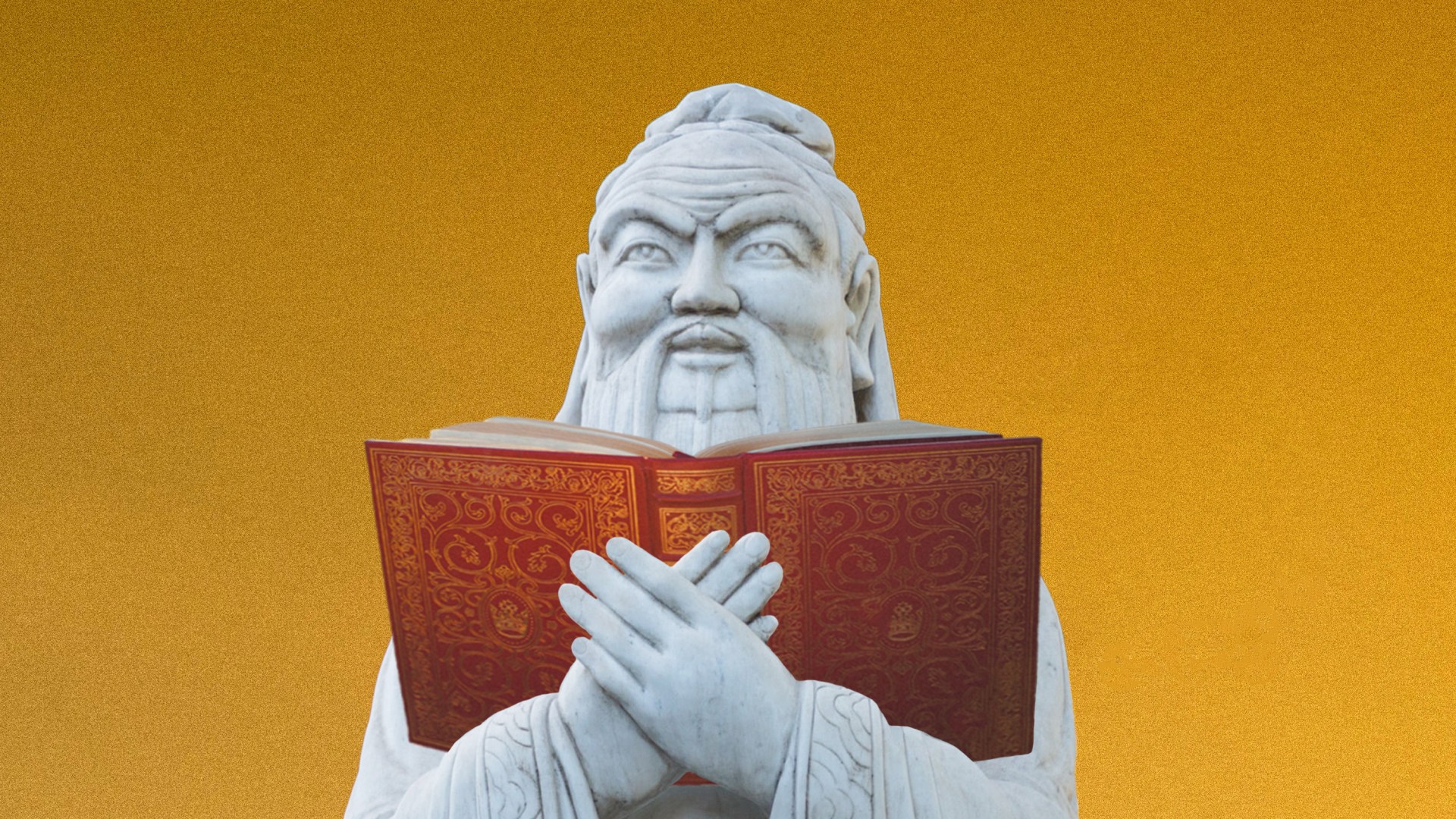
What are some of the images or impressions that come to mind when we think of Kongzi (Confucius, 孔子) or Confucianism? It may surprise us today that the traditional Chinese depiction of Kongzi is not what we would expect for a sage who’s reputed to have had such a deep and wide imprint on East Asian worldviews and cultures. It is this inconsistency that led Creel to explore whether or not tradition has failed to accurately portray the Kongzi who lived 2,600 years ago. Though extensively researched, the book is fully accessible to the general reader. If you want to understand what makes the largest ethnic group in the world tick, start with this book.
Confucianism and Christianity: A Comparative Study, by Julia Ching
Confucianism and Christianity: Isn’t that like comparing apples and oranges? Is Confucianism a religion or a philosophy? These questions have not been adequately answered for at least 300 years (since the arrival of early missionaries in China) and it’s not Ching’s intention to attempt this. Rather, in placing the biblical faith side by side with the Confucian heritage, she hopes to provoke further thinking on whether Christianity and Confucianism are compatible.
Today this reflection is ever more urgent as missiologists emphasize the need for cultural contextualization in Christian evangelism and discipleship. This book may not sufficiently persuade you one way or the other, but this dialogue ought to be revived.
To Acquire Wisdom: The Way of Wang Yang-ming, by Julia Ching
Wang Yang-ming was an accomplished soldier, statesman, and Confucian philosopher during the Ming dynasty whose writings profoundly influenced the political and intellectual development of China, Japan, and Korea. He was fascinated by questions wrestling with the meaning of life but also spent much of his life attempting to rescue Confucianism from the “vulgarized form” he believed it had morphed into. Ching’s work on the thinker opens with a general discussion of truth and ideology before seamlessly moving into analysis of Wang’s philosophy, concluding with a selection of his poems—their first appearance in English.
The Religions of China: Confucianism and Taoism Described and Compared with Christianity 1880, by James Legge
In this classic by James Legge, 19th-century missionary to China, the Scotsman argues that Confucianism, while not purely a religion, does allude to the existence of a monotheistic God. Along this line of thinking, he contends that in order for the Chinese to readily accept Jesus Christ and not perceive Christianity as a foreign religion, missionaries must contextualize the term used to refer to God from shen (神) to shangdi (上帝). While he received strong criticisms and was disregarded for his work by his peers then, I suspect he would be very much commended today.