
Brainstorm
Metro-Goldwyn-Mayer/United Artists; directed by Douglas Trumbull
Like the diamond that shatters a ray of perfect light to create its beauty, Brainstorm violates acknowledged standards of aesthetic decorum. Yet through its irregular narrative prism, a lovely sense of spirituality emerges that transcends the film’s obvious flaws.
This is high-tech cinema, directed by special-effects pioneer Douglas Trumbull. Many of the movie’s startling images were filmed with the new Super Panavision process for greater image clarity. Unfortunately, Brainstorm fails to translate a like lucidity to its hopelessly muddled screenplay. The plot revolves around an elaborate device that can record, play back—and violate the sanctity of one’s thoughts and emotions. Questions of morality arise when government agents plot to use the machine for sinister purposes. The dedicated scientists fight for control, and lose; but not before they complete their incredible journey of self-discovery to the boundaries of death and beyond.
On this level alone. Brainstorm redeems itself despite Trumbull’s directorial errors. For all its complex hardware, this is still a film of the spirit. 1984 is upon us, and in living rooms everywhere computer terminals blink on like a third eye. But the message of this not-so-far-fetched fairy tale is that the ghost in the machine is us. We can miniaturize our microchips and cart around our minds like carry-on luggage, but when the button is pushed and the program is running we are merely playing back ourselves. Our machines only reflect our own capacity for good and evil.
Yet this dichotomy is the hope of humanity: we are more than our machines. We have an everlasting destination beyond some Silicon Valley scrap heap. When Dr. Brace (Christopher Walken) records loving moments of courtship and marriage as a gift for his estranged wife (the late Natalie Wood), the implication is clear: the human spirit cannot be erased like a floppy disc.
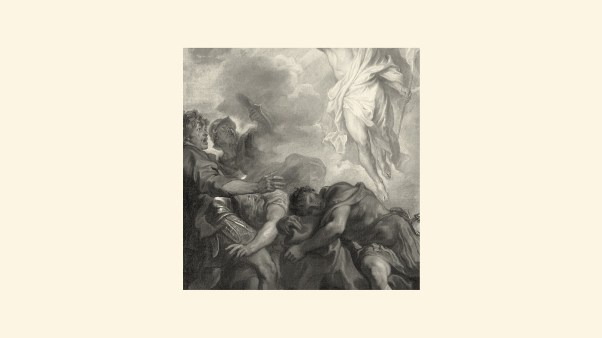
In Brainstorm’s finale, Brace experiences a colleague’s death, and we are treated to a glimpse of heaven. Clearly the scientist has soared beyond his own invention and taken us with him—and the light he approaches is the eternal source of mankind’s divine shadow.
Reviewed by Harry Cheney, a writer living in Southern California.