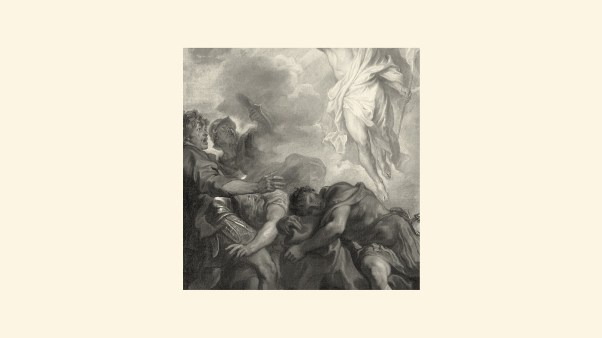

These things said Isaiah, … and spake of him (John 12:41; read 12:37–41).
More than any other man in the Old Testament, Isaiah saw the glory of Christ. When we call this man the greatest Christian before Christ, we refer to his knowledge of the coming Redeemer, and to his presentation of Christ’s work of atoning for sinners. Of all the Old Testament writers, this man is most often quoted in the New. Among all those inspired books we could least afford to lose this one, for here we have the Gospel before Christ came to seal it with his blood.
I. The Greatness of This Man’s Writings. Other men of the Old Testament we consider great because of their actions; this man because of his thought and his writings. Even now the best way to learn the language of heaven and thus fit ourselves for dwelling in the City of God is to know the music of Isaiah. In this book the great verses and promises would in themselves almost make a Bible. About the life of this prophet we know but little in detail, but we know much about the transforming experience at the beginning of his long career as a prophet.
II. The Greatness of This Man’s Vision. While at worship in the temple, young Isaiah beheld a transforming vision of God and his holiness. The first effect of this overwhelming vision was to impress Isaiah with his own sinfulness. Then came the vision of cleansing, as by fire. And after that, the call of opportunity and duty. From that day to this, wherever the Church drifts from the true Gospel, and from Christ as the Redeemer from sin, the reason is that the sense of sin has faded.
III. The Greatness of This Man’s Witness to Christ. The greatest thing about Isaiah was his witness to Christ and his glory on the Cross. That witness appears at its best in one glorious chapter, the fifty-third. There we can listen to the most moving and uplifting music of redemption. There we behold the dying Redeemer, the Sin Bearer. Just why or how all that could be, we cannot tell. But we know that he died for sinners like ourselves, and that he did not die in vain.
In the Church today we need this note of triumph. Everywhere we behold what looks like a revival of paganism. But when I read the pages of Isaiah, who saw Christ’s glory and spake of him, I see the kingdom of Satan overthrown. But I see something more than that. I see Christ as the sinner’s Saviour, my own Redeemer. All my hope is based on what Isaiah wrote of him, when he beheld Christ’s glory: “though your sins be as scarlet, they shall be as wool; though they be red like crimson, they shall be as white as snow” (1:18b, c). (From Sermons on Old Testament Heroes, by permission of Abingdon Press.)